Do Professional Photographers Photograph Everything?
Understanding generalist and specialist photographers, and how to know which one you need.
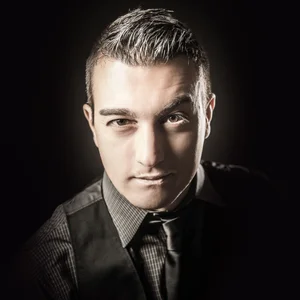
I've lost count of how many times this conversation has happened. Someone asks what I do for a living, and I tell them I'm a portrait photographer. Almost immediately, the questions start coming. "Can you photograph my dog?" "Do you do cake smash sessions?" "Could you photograph our company's holiday party?" I've been asked about sporting events, Bar and Bat Mitzvahs, weddings, children's birthday parties, and just about everything else you can imagine.
Every once in a while, when I mention that I specialize in studio portraits, someone will say, "Oh... like JCPenney?"
I can't help but cringe on that last one.
But I also understand where it comes from. To most people, photography is photography. If someone owns a professional camera and knows how to use it, why wouldn't they photograph everything?
It's a fair question. And honestly, I think the photography industry itself is partly responsible for the confusion.
Photography Doesn't Have One Career Path
Think about becoming a doctor, teacher, or home builder. There are established paths into those professions. Photography is different.
There are excellent photography schools, professional organizations, workshops, and degree programs, but there isn't one universally required path someone has to complete before becoming a professional photographer.
Most of us figure out our path as we go.
In fact, almost every photographer starts by photographing a little bit of everything. Friends, families, pets, events, products, cars, landscapes. Whatever gives us an opportunity to practice and learn.
Eventually, we figure out what we're good at, what we care about, and what kind of work we want to keep doing.
Some photographers love the variety and continue photographing many different kinds of people, events, and projects. Others find an area they want to explore much more deeply.
That's where you get generalists and specialists.
Generalists Build Breadth. Specialists Build Depth.
Think about restaurants.
Some have menus that seem to go on forever. You can order burgers, pasta, seafood, steak, breakfast, and cheesecake all under one roof. Yes, Cheesecake Factory immediately comes to mind.
Then there are restaurants with six entrées on the menu because the kitchen has spent years refining those six dishes.
Both can serve a great meal.
They're simply built differently.
Photography works much the same way.
A good generalist develops the ability to walk into many different situations and create good photographs consistently. That versatility can be exactly what a client needs.
A specialist makes a different tradeoff. Instead of developing breadth across many kinds of photography, they go deeper into a particular kind of work.
For me, that's portraiture.
That means studying far more than how to operate a camera. It's lighting different faces and bodies, posing, expression, lens choice, color, retouching, wardrobe, communication, and understanding how people respond when they're uncomfortable in front of a camera.
Then there are additional layers depending on why we're creating the portrait.
With branding, I need to understand who you're trying to reach, what the photographs need to communicate, where they'll be used, and how they support your business.
With boudoir, privacy, boundaries, comfort, posing, body image, and trust become incredibly important.
With a portrait designed for someone's home, I'm thinking beyond the photograph itself. Where will it live? What size should it be? How should it be framed or displayed? What will still look beautiful twenty years from now?
That's what specialization really means.
It isn't simply photographing fewer things. It's choosing where to develop greater depth.
So, Which Kind of Photographer Do You Need?
This is the part that actually matters to you.
Start by asking yourself:
What do I need these photographs to accomplish?
If you're having a birthday party and mostly want someone to document the people, decorations, cake, and everything happening around you, a talented generalist may be exactly what you need.
If you're rebuilding your company's website and need photographs designed to communicate a specific message to a specific audience, specialization becomes more valuable.
If you want one beautiful portrait designed specifically for the wall over your fireplace, you may want someone whose process doesn't end when the digital files are delivered.
And if you're considering something as personal as boudoir, you may care just as much about privacy, guidance, boundaries, and how you'll feel during the experience as you do about the photographs themselves.
Those aren't better or worse photography needs.
They're different needs.
And that's why choosing a photographer based solely on whether they can photograph something doesn't tell you very much.
The better question is:
Is this the kind of work they've chosen to become exceptionally good at?
A photographer may be capable of photographing almost anything. But the more important the outcome becomes, the more valuable it can be to work with someone who specializes in creating it.
So the next time a photographer tells you, "That's not really what I photograph," don't assume that's a limitation.
Sometimes it's exactly the opposite.
They know where they're strongest, they've built their process around it, and they're willing to point you toward someone better suited for what you actually need.
That kind of honesty is valuable. It means they're not simply trying to book every inquiry that comes their way. They're paying attention to whether their experience, approach, and strengths are a good match for what you're hoping to create.
And isn't that exactly what you'd want from a professional?
Looking for the Right Portrait Experience?
If what you're looking for is intentional portraiture, whether that's for your business, an important chapter in your life, or something deeply personal, start by telling me what you're hoping to create.
You don't need to know which session you need. That's something we'll figure out together.